Klasse Pınar Öğrenci
Zur Person
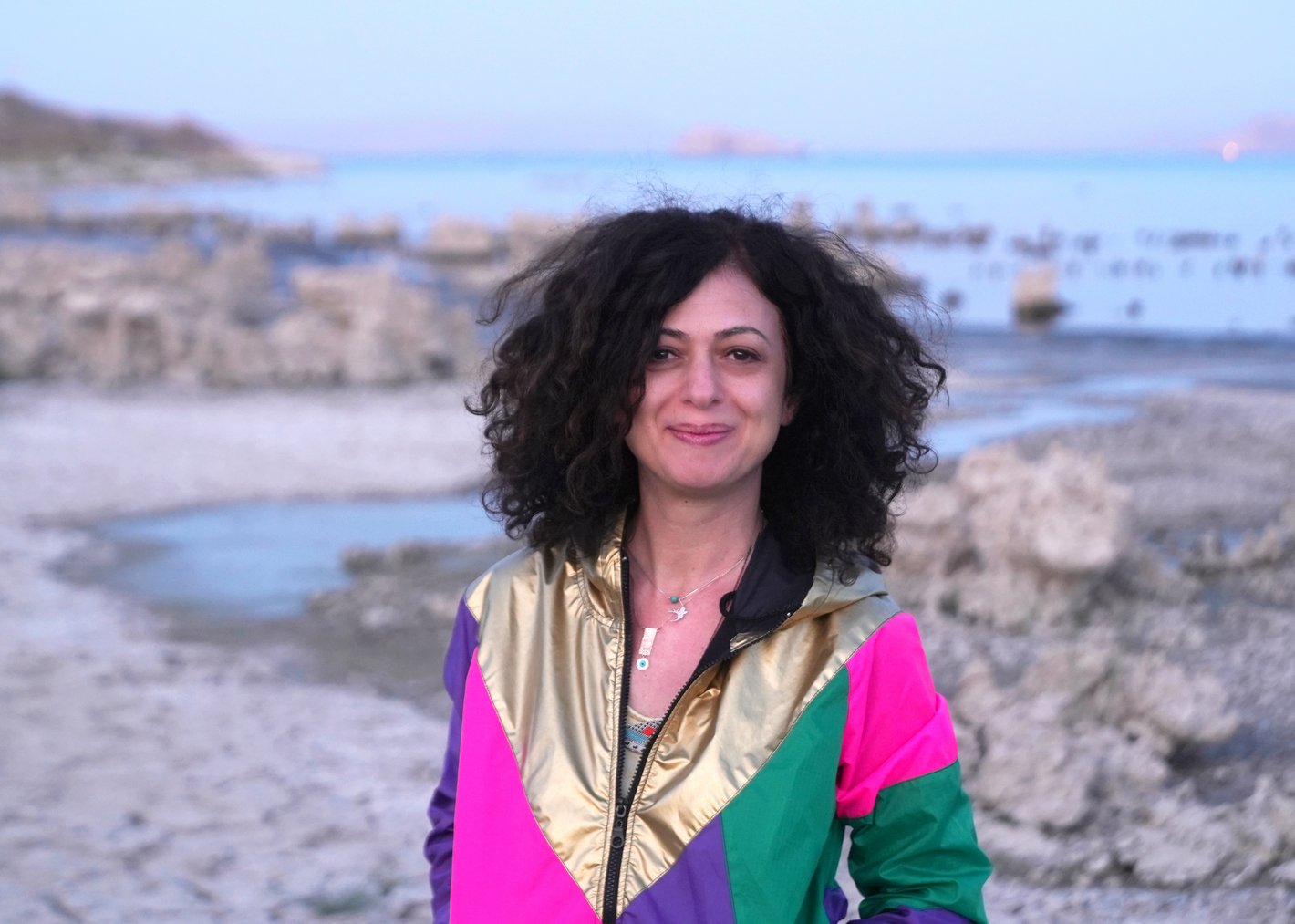
Artist and filmmaker Pınar Öğrenci (b. 1973, Van, Turkey) lives in Berlin. Displacement, migration, survival, and resistance are central to her films and installations. With a background in architecture and restoration, her poetic, research-based video works and installations draw on traces of material culture related to forced displacement. Öğrenci engages with place, site, and architecture as materializations of violence. Her practice responds to collective histories often left unspoken, inviting audiences to imagine futures grounded in justice, equality, and collective healing. Her work has been widely exhibited at major biennials and institutions, including HKW (2025), the Venice Biennale (2024), the Harvard Art Museums (2024), documenta fifteen (2022), the 12th Gwangju Biennale (2018), the 6th Athens Biennale (2018), and the 13th Sharjah Biennial (2017). She has held solo exhibitions at the Museum für Kunst und Gewerbe Hamburg (MKG, 2025), Frac Bretagne (2024), the Berlinische Galerie (2023), the Kunst Haus Wien – Museum Hundertwasser (2017), and Depo Istanbul (2017).
Her films have been widely screened and discussed in academic contexts in the United States, including at Columbia University, Cornell University, the University of California, Berkeley, UCLA, and Bard College. She was nominated for the Böttcherstraße Art Prize in 2022 and was awarded the Villa Romana Prize in 2023. In 2010, she founded the art initiative MARSistanbul, which she directed until her migration to Berlin in 2018. Since the late 1990s, Öğrenci has written extensively on contemporary art and architecture for various publications, including K24, Agos, Radikal, ArtUnlimited, m-est, SALT Online, Arkitera, Arredamento Mimarlık, and the dissident blog of Swedish PEN, among others.
Im Sommersemster hat sie die Verwaltung der Klasse Raumkonzepte inne.
Lehre in der Klasse Raumkonzepte
Space is never neutral. It is produced, organized, narrated and contested. It shapes how we see, move, gather and remember — and in return, it is reshaped by our actions, images and stories. To work with space is therefore to work with power, visibility and possibility. Following Hannah Arendt’s notion of the “field of appearance,” we can think of art as an act of making something appear — not only objects, but relations, tensions and hidden structures. Every artwork constructs a space: physical, visual, sonic, social or imaginary. In doing so, it can reproduce dominant narratives or open cracks within them. Architecture, the city, the street, the screen, the exhibition space — these are not just containers of form but environments shaped by histories of modernism, colonialism, capitalism and migration. They discipline bodies, distribute visibility and organize time. Yet they also hold latent potentials: solidarity, resistance and poetic interruption. In this course, we will approach space not only as form, but as process; not only as structure, but as lived experience. Through video, photography, painting, installation, sound or hybrid practices, we will ask: How can art transform spaces of control into fields of appearance? Space becomes both our subject and our method: something to analyze, inhabit, question and reimagine.